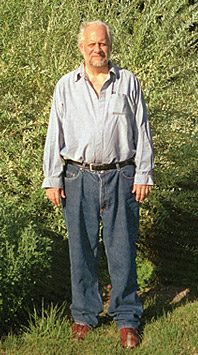
Meet The Press

by George Ball

From time to time a blog “seeds” a following blog with a new idea or thought. Last week I touched on ‘La Dolce Vita’, a movie that prominently featured the “paparazzi”, which were new at that time. Media conglomerates mushroomed after World War II across Europe, fueled by new technologies of inexpensive daylight flash bulbs, fast rolling film, and emerging economies protected—or better liberated—by allied occupation forces. But since ancient times, Europe has had a vigorous community news culture.

When I briefly lived in Germany, I noticed everyone in the small city knew everyone else and the media was formal and discreet—public was one thing, private another. This made perfect sense: what’s the point of telling people what they already know? The “familiar” was often just that—large, extended families. Thus, the daily news was mostly regional: southern Germany and then, as available and urgent, national news. The nearby city of Frankfurt had an excellent newspaper. But my German language skills were in their infancy. News in English about the US was non-existent. I came of age at a time when expats in Europe would roam the streets looking for a recent copy of the International Herald Tribune. A “new” copy depended on the one-day rhythm of the wire services. Satellites? What satellites?

Germany was a long way from home, and eventually I gave up caring. A very wealthy friend talked to his mom and dad almost every day. “The President is in hot water.” “So?”, I said to myself.

I became concerned about the Soviets in East Germany, aka the DDR, at that time in the grip of Erich Honecker, a brutally effective puppet dictator with an arsenal of nuclear missiles hidden behind a medieval-looking wall. This fascinated me. Friends and I used to inspect it with cheap tourist binoculars on trips to West Berlin. It was hard to imagine a wall to keep an entire nation imprisoned. I was young and naive. The effect was skin-crawling. German friends told me the “guards” were snipers and professional assassins. It looked weirdly quaint. It was small and lethal—dressed to kill.

“Press” refers to the old gravity-based printing presses, which no longer exist. Nowadays, like a touch of Brownian motion, the ink is run so thinly, quickly and lightly you can hardly see impressions being made on the newsprint. Glossy magazines contain photographs printed electronically in ways I cannot comprehend, much less describe. Weight is so minimized that it’s hardly an issue.

Some think the word “press” refers to the actual pressure of crowds of reporters on an object of newsworthy attention. This seems a logical definition, given the swarming hordes of paparazzi-like media. Journalism (even the word seems hollow today) has ironically come under scrutiny by the media itself—a typical post-modern theme. What is “reality”? “Nothing is new” is becoming “old”, and that shift is “making news”. How many political and celebrity scandals can we stand? A lot, according to the internet. Our fascination with them seems to be born with each generation in a slowly crumbling media world. (Or is it “evolving”?)

Today’s tawdry 24/7, Moloch-like media was not always the norm. Our new transnational corporate domination of the press reflects a European model. The difference is culture and intelligence. Europeans read more, have higher vocabularies and better language skills. Sorry, but these are the facts. They can cope with discernment better than we can. This is unfortunate.

We used to have a superior, freer media to Europe’s. Diverse, too. Our newspapers numbered in the many thousands, not the few hundreds. Today, several major US cities have no daily newspaper—New Orleans being the most notable. Many more have only one: Pittsburgh, Cleveland, Atlanta, et al. Others may have two, but they are owned by one company, such as my new hometown of Philadelphia. Still others have a second paper that is so small that it makes little impact on its community. The Boston Herald comes to mind, poor thing. This trend toward homogenized news is a response to television, radio and the online media. Small, local newspapers are disappearing.

It is obvious that the instantaneous “classifieds” making up most of the revenue of the online media and the consequent collapse of newspapers—and especially magazines—are smothering the “old media”. This is tragic for the US, its people, civic institutions, churches and schools. What is next? Books?

Why were thousands of small town and city newspapers—Chicago had 4 major dailies in my childhood, one with 2 editions for morning and evening—so successful? So vital, sensational and fascinating to read? It wasn’t only that you could hold them in your hands, and read the print in reflected light. It was also because the overwhelming majority were owned by locals, and all were run by “naturals”. Newspaper staffs consisted of quick, intelligent, verbal, nosy people who were phenomenally capable of building close personal relationships with two essential groups: the police and fire departments.

Reporters focused like laser beams—and face to face—on the people essential for community health: police and fire, which now includes EMT, since traffic accidents comprise the majority of publicly visible events or, in some cases, tragedies. House and commercial building fires have become so rare that fire departments have shrunk in size, but not in importance. My hometown newspaper was owned by the retired Fire Chief. Firemen know every square foot of their communities. Also, ambulance companies have emerged as secondary news sources.

On the other hand, police forces have greatly expanded and become extremely sophisticated. The invasion by drug dealers and, consequently, home invaders and street thugs, have put the nation’s thousands of local communities on “red alert”. God bless anyone in a uniform.

Relevance to gardening? Imagine if the weatherman reported the conditions several hundred miles away. “Honey, let’s switch the channel and find out what the conditions are in Kazakhstan.”

Gardening is the police and fire departments combined: we need to know the conditions of every square foot of our yard, the pests and predators in both the garden and immediate neighborhood surroundings. Speaking of the weather, we actually have to be amateur meteorologists, at least with respect to the few hundred miles surrounding us.

Garden press? Better reinvent itself quickly. “Don’t just do something, stand there”, seems to be their motto. Ironically, that’s good advice if you are taking time to plan your reinvention. Do a retreat with your editors or bosses. Or at least have a cup of coffee with them. But it might be too late to plan. It seems, to me at least, that the garden media is following no plan, no model, no logic. Try police and firemen as a model. Or graft yourself to the weather department. “Localism” is a good starting point.

Finally, it would be great to see a new phenomenon—swarms of eager photographers and reporters gathering around a new flower or vegetable for 2013, as if it were Anita Ekberg. (Stay tuned.) We could nickname them, “poppyrazzi”.

Music and Birds

by George Ball

Now’s the time when the birds feast on berries and seeds. I’ve often puzzled over this rich diet of 100% birdseed. One friend conjectures that it’s probably good for long flights southward. Another friend maintains that birds congregate around feeders and baths more to “socialize” (what diction these days!) than to stock up on reserve jet fuel. “That would be the bears, honey,” she said to us. Still another told me that birds eat far more berries (or “flesh” as we call it here at Burpee) than hard seeds. Since putting out our 2013 catalogue keeps me from the extra work of close, careful bird observations, I cannot report definitively.

I shall say one thing: birds have been singing less in this dry, relatively insect-free year of 2012. I deeply miss their songs. I was reminded of this absence by a very warble of music by Ralph Vaughan Williams on our local classical music station here in the Delaware Valley. Like a deep exhalation during yoga, or a cool wet washcloth to the head after yoga, Vaughan William’s nearly perfect symphonic music brings life back to the dying.

In however diluted a form, today’s “pop” owes whatever musical value it has to the contributions of Ralph Vaughan Williams. There is some originality in, for instance, Miley Cyrus, whose hybrid-like phrasing can be as plaintive and graceful as Patsy Cline one moment and forceful and gutsy as Bessie Smith or Ma Rainey the next. Ralph Vaughan Williams hybridized too—very widely on the levels of the symphonic orchestra and “art song” (vocalist and piano), drawing elements from the diverse gene pool of folk music spread across and throughout every corner of the British Isles. He in turn has left an enormous mother lode of these traditional melodies for others to mine.

One unexpected case is Nino Rota, who borrowed several sublime melodic themes from Vaughan Williams’ “Norfolk Rhapsody #1” for his own surrealistic soundtrack to Federico Fellini’s 1960 movie, “La Dolce Vita”. Rota uses Vaughan Williams’ earthy, simple motifs to contrast with the sterility of cosmopolitan Rome, and particularly the glittery, noisy existence of the protagonist, Marcello, whose hellish life is surrounded by newly built modernist ruins. Vaughan Williams’ poetic themes, reprised here and there by Rota, remind the viewer that alongside the ugliness of life, there is something beautiful and pure, lingering just beyond its dead surface.

There are sheep that get in the way of Marcello’s sports car, and the larger-than-life American movie starlet puts a kitten on her head (shades of the Amazon past) and, later still, she howls like a wolf. Rota’s pastoral melodies function as both lamentations and sirens. “There is something wilder, lovelier and more natural than this”, the music seems to say. Profoundly ironic.

But there is no such irony—none needed—when you encounter Ralph Vaughan Williams for the first time. His music offers luxuriant, pure beauty, similar only to Handel’s. Many complain that he is too “English”, which is like bemoaning Bach or Beethoven for being too “German”. In fact, he is utterly unique, able both to transcend as well as descend, like Orpheus, his sources of inspiration. A few other composers have also tried their hand at hybridizing classical music and traditional folk song: notably Dvorák, Kodály, Stravinsky, Janácek, and Bartók. Striking that they’re all Central Europeans. What sets them apart—like the British too—from modern classical composers is an almost religious devotion to the folkloric music traditions of their homelands.

Vaughan Williams limned a song tradition in the British Isles that is richer than any other. He also used, as all composers did long before his time, natural sounds of the landscape and, in his case, especially around East Anglia. Also called “The Fens”, this happens to be the home of the modern (150 years) British seed industry. It is flat and dotted with swamps. It reminds me of parts of Illinois where I grew up, so I loved travelling there back in the ‘80s on business, visiting the many great seed companies. The vistas are heartwarming to anyone who loves farmland or grew up around it.

I recall sophisticated friends from college who were either Londoners or schoolmates passing through London. They would find out I was in the UK on business and phone me asking what on earth I was doing up there. “Why did you get stuck in Norfolk?” (laughter) and “God, when are you coming down to London?” Of course, London is one of the world’s great cities, but I felt disoriented every time this happened. They were worldly, but unaware of one of the world’s most quietly beautiful areas. Desolate, still and covered with lush crops most of the year. To them it was like outer space. What little the world knows of seeds, birds, estuaries! My secret view was “When are you all coming up to East Anglia?” Besides, I had work to do: new flowers and vegetables to find, seed to harvest and sing about.

Heronswood Voice Moves to Native American Tribe

by George Ball

Dear Heronswood Customer and “Heronswood Voice” Reader,

Last summer we sold Heronswood Nursery and Gardens to the Port Gamble S’Klallam Tribe. Thus, the first Native American botanical garden in the US began its existence on the Kitsap Peninsula in Washington State. Therefore we are donating this, the Heronswood Voice blog, to the Port Gamble S’Klallam Tribe. In order for you to continue to receive this blog, you will need to, please, change your bookmarks and/or favorites function, in order to “re-subscribe” to the new Heronswood Voice.

If you enjoyed the former Heronswood Voice, you might wish to subscribe also to Fordhook Voice. I shall be writing from now on over there. I shall concentrate on the same general subject of gardening and its social and cultural contexts. Nick Rhodehamel will continue to write “guest” articles. Our focus will be Fordhook Farm and the Burpee Company, the former owner of Heronswood. The Port Gamble S’Klallam Tribe has great plans for the future of the uniquely beautiful Heronswood Gardens. Please subscribe to their new blog.

Thanks very much for reading Heronswood Voice. I hope for nothing but the best for the PGST. Also, I wish you the greatest success in your own garden or community garden and, finally, look forward to future responses over at Fordhook Voice.

Sincerely,

George Ball


P.S. Please note, to update your bookmarks (or favorite places) please go to www.fordhookvoice.com and add the new page as a Bookmark (or favorite place).

A Tale Of Two Gardens

by George Ball

Here in Doylestown, Pennsylvania, “Heronswood East” is what, until recently, we called the 4-acre shaded areas of Fordhook Farm devoted to rare perennials, shrubs and ornamental trees. It still consists of a dream-like complex of several gardens containing thousands of rare and experimental hellebores, epimediums, thalictrums, geraniums, sedums, lysimachias, mahonias, begonias, primulas, cardiocrinums, weigelas, impatiens, hydrangeas and hundreds of other genera and species, aka “taxa”.

Also, it continues to be a challenge to find the right place for each specimen we culled from the original Heronswood Garden back in Kingston, Washington, always careful to “thin” the often-crowded beds, without ever removing a population entirely. Despite what a few over-anxious locals back in Washington say, this process is called “dividing” perennials—an essential part of gardening. We culled, thinned and divided—whatever you wish to call it—for several years, and then finished up the work about a year ago. But we kept two seasonal part-time gardeners—Alan Hansen and Suzanne Hissung—on retainers to help us keep the gardens preserved and intact, as the following article from “The Garden Conservancy News” attests:

“A New Future For Heronswood Gardens”

The sale of Heronswood to the local Port Gamble S’Klallam tribe was completed on Thursday, July 22. Over the past twelve years, George Ball and W. Atlee Burpee & Co. have been committed to preserving and maintaining the garden and its extraordinary plant collection. Since 2006, they have generously welcomed thousands of people to the garden through our Open Days program.

The property was put on the market that same year, and since then Burpee has been looking for the right buyer who would and could continue to maintain the garden and keep it open to the public. The S’Klallam tribe plans to do just that. The first opportunity to visit the gardens under this new ownership will be on July 28 as part of our Open Days program. Proceeds will once again benefit our preservation work at the Chase Garden in Orting, Washington.

Bill Noble, the Garden Conservancy’s director of preservation says, “We applaud Burpee for keeping the garden intact and maintaining it for so many years. They have assured that it is placed in the hands of people who value the garden and will manage it as a resource for the public. Heronswood is a wonderful collection of plant materials and an important horticultural destination.”

According to newspaper reports, the new owners are committed to maintaining the garden as an asset to the community. As reported, S’Klallam tribe chairman Jeromy Sullivan said, “We understand how passionate people are about Heronswood and, as a neighbor, we are committed to maintaining this local treasure.”

However, the aesthetic contrast between Fordhook Farm and Heronswood couldn’t be starker. Fordhook is 60 acres, Heronswood 15 acres. Fordhook is mostly full sun, about 80% of the 20-25 acres of display and research garden area which fluctuates every year. Heronswood is essentially a heavy shade display garden, and again about 80%, or 4 of the 5 acres.

Heronswood possesses a “through the looking glass” quality or “down the rabbit hole” effect. A famous garden designer told us she’d never seen a garden even remotely like it before, “and I’ve seen them all”, as she put it. Mysteries jump up or pop out at you from every corner. Most people find it delightful, while some are a bit overwhelmed. But all are charmed.

Heronswood is “folded”, much like the Asian culture that its design references, perhaps unconsciously. The gardens reveal themselves in unique layers with each visit. Ergo, the passionate attachment to it of the locals who can visit several times a year. During its heyday of the late 90s to 2006, Heronswood became a cult, of sorts. If you especially like odd and unusual shade plants adapted to a warm and wet zone 8, you have found the Beulah Land.

Fordhook Farm offers a completely opposite experience. Although we have replicated Heronswood-type research gardens in full shade, they occupy a small fraction of the property. The glory of Fordhook Farm is not only its history—though that was enough to receive its National Register of Historic Places status—but also its openness to the broadly dramatic sky for which the Philadelphia area is famous.

At its center, Fordhook Farm sits astride a ridge. But, in fact, there are three major elevations. A large hillock with a copse surrounding it descends from one corner of a long 60 acre diamond-like rectangle to fan out below in an “upper meadow” of about 15 acres. This middle level is the widest part of the estate and borders the ridge, which is more like a sort of rim or lip from which, facing southeast, the land slopes down, tapering to a ravine about 50 feet below where the property ends in a diamond tip, cut at the point by the local sleepy passenger train line. It appears much larger than its acreage, like a movie screen projects images. It’s full of light and very rhythmic.

There’s a large descending lawn in front of the Main House, which is a French style bastide set on the ridge. To its right or east, you can see a shaded, descending hellebore walk, and a full-sun creek walk nearby. These areas are punctuated by a bridge and a pair of man-made ponds, complete with a colony of frogs. Near the very bottom of the ravine is a collection of shade (both full and partial) as well as sun-loving plants in a series of odd-shaped beds at the edge of the woods near the railroad tracks.

Behind the Main House/Carriage House/Burpee Hall triangulation, which includes an 80 seat conference center, spread out the historic fields and meadows where the Burpee flower and vegetable “firsts” were either discovered, developed or collected by our founder, beginning in 1888, when he moved his research here from his small, crowded test plot in Philadelphia, where he began his research in 1876 as a young man. Later, his sons worked at Fordhook for the majority of the 20th century. We have experimented at Fordhook for the last 22 years.

Among the many innovative cultivars that helped make “Burpee” a household name are ‘Iceberg’ lettuce (the first crisphead lettuce, thus the first year ‘round salad green), ‘Golden Bantam’ (the first yellow sweet corn), ‘Fordhook’ (the first bush lima bean—meaning no more 12 foot staked plants with ladders up the sides), the first “stringless” string bean, the first ‘burpless’ cucumber. . . in short, the first—and even second and third—generation of American vegetables—varieties that could survive our often tropical late spring, summer and early fall climates throughout much of the continental U.S. All were bred or discovered at Fordhook.

Next to these famous test plots is a four story Seed House—one of about a dozen of these unique and distinctive structures left in the world and a major attraction for our Open Day guests. To the north is a large full-sun perennial demonstration and Japanese sculpture garden, and to the west is a chessboard, or ‘The Last Year at Marienbad’ movie, meadow where I have placed most of our monumental Steve Tobin sculptures, spanning 20 years of this world-famous artist’s career, as well as a collection of rare and unusual conifers deliberately set apart from one another, just like in the aforementioned surrealistic movie.

And that’s only about half of Fordhook Farm. Rambling across the 30 other acres, you can find several large (1-2 acre) full-sun scientific test plots with row-by-row vegetable, annual flower and full sun perennial candidates in what we call “root camp” and “Catholic school for plants”. These are blind test plots. If an experimental line doesn’t make it there, it is rejected, no matter who created it.

In addition to these sections, you will find a small poignant shade garden devoted to my mother, Vivian Elledge Ball, and designed by Dan Hinkley in 2001, the year after she passed away.

On the opposite side of the estate, near the visitor entrance, are several more Steve Tobin sculptures, some magnificent beeches and a large (1 acre) vegetable display garden called The Kitchen Garden, serving as a “beta” site for the “alphas” that survived “root camp”.

Then, you will find you are close to where you might have started. Behind the vegetable garden is the entrance to the “Hellebore walk”, where we research and show off our collection of thousands of these seductive creatures in almost all shades of colors.

Yet, the main quality of Fordhook is its magical “stepped out of time” feeling. It isn’t a forced or contrived effect; it was there when I arrived. I had nothing to do with it. I walked the perimeter and was smitten by it. The ancient Chinese would have called Fordhook, “place where the ladders of heaven descend”.

Spend any amount of time here and you never forget it. But it is for a different reason you return to Heronswood, now relocated officially to Kingston, Washington. Fordhook is extremely “open”—there is nothing “folded” about it. It is more like a massive set of pearl necklaces you see on older women in Italy. The “grandmas” wash them—thick strands of pearls still around their neck—in the Mediterranean, when they go wading with their families. By contrast, Heronswood is an intricate, bejeweled brooch, the last thing a woman puts on before she goes out for the evening—her finest piece.

Fordhook Farm will be on display soon. Coming up just next week—Friday, August 24 and Saturday the 25th—the gardens will be open. We’ll be selling rare plants of berries and exotic ornamental perennials at bargain prices, giving lectures on the many new blueberries we have coming out now, conducting guided tours, and offering tomato tastings from our extensive collection of 137 years of breeding these sensational vegetables (berries, in fact). Plus, of course, you can just float around the large and lovely estate.

The People vs. Broccoli

by George Ball

Your Honor, I’d like to make a few preliminary remarks to provide context and perspective on the case before the court. As a third generation seedsman, I have agreed to pro bono representation of perhaps the most hated and maligned vegetable of all time.

Like walking on our legs from one destination to another, at one time eating cabbage was the common way adults received their nutrition, putting one leaf in front of the other, so to speak. And, like a daily walk, the cabbages kept us young. However, so-called “head cabbage” is but one member of the enormous—and hugely important—family known as the Brassicas.

But it is “Broccoli”, the family’s most controversial member, that is on trial today. Yet I shall prove that my client is the vegetable that can do no less than save humankind. I shall demonstrate Broccoli to be the most succulent, tasty and life-enhancing of all vegetables, from the base of its handsome stalk to the crown of its flowery head. Can you eat Pea’s stringy vine, Corn’s cob, Bean’s coarse stalk, or Melon’s spiny leaf?

Only Broccoli allows you to eat the entire plant: asparagus-like stalks, savory green leaves and delicately sweet, nutty flavored heads of clustered flower buds. My client represents nothing less than the pinnacle of vegetable sophistication.

Broccoli is desirable for not only its taste, but also its extraordinary promotion and protection of human health. No plant possesses more antioxidants, vitamins, beneficial enzyme-stimulating compounds, and metabolism-enhancing fiber, than my client.

Broccoli is richly endowed, by both natural law and thousands of years of continuous human selection, with vitamins A, B1, B2, B3, B6, C and K. For instance, a cup of cooked broccoli provides more vitamin C than an orange. This same cup supplies over 10% of the daily requirements of calcium, chromium, magnesium, iron, potassium and zinc. Add metabolizing and enzyme-boosting agents such as folic acid and calcium pectate, and cancer-fighting antioxidants such as beta carotene, carotene and sulphoraphane, particularly in the dark green florets, and you see that eating broccoli nips diseases in the buds.

Also, it is well known that my client possesses healthful fiber. But it is hardly known that Broccoli contains substantial amounts of cell-building protein and eye-protecting lutein. In short, your Honor, my client is as close to perfection as a vegetable can be. For people not to eat Broccoli is a crime.

Therefore, why is savory, succulent and creamy-textured Broccoli on trial? For being too healthy? Too tasty? Too easy to grow in all 50 states? No: my client is accused of being “too bitter”. Not true!

I offer two defenses: this apotheosis of subtle flavors and powerfully healthful properties needs to be grown to peak stage—before the flower buds fully open—transported quickly from farms and home gardens to the kitchen, and then steamed, par-boiled, sautéed or stir-fried. Thereby, I can prove, beyond a reasonable doubt, that my client possesses the most sublime vegetable flavor available to the human palate.

Second, Broccoli has been capriciously defamed by powerful figures in the world of politics, the media and even the legal profession, for well over a generation. It was 1990, 22 years ago, that our nation’s president declared that he hated my client, resulting in three decades of disparaging remarks by influential figures in all walks of life from nighttime talk shows to the Supreme Court.

President George H.W. Bush’s opinion was an unfortunate result of the commercial production of Broccoli: picked unripe—thus deficient of both flavors and healthful compounds—and shipped thousands of miles to sit a week on produce counters. Customers either try them and taste the bitterness without the balancing sugars, or pass them by, frowning, having been swayed by negative publicity.

Finally, it is the children of America who will suffer if you do not find my client as delicious as the ubiquitous Spinach, the fashionably red, yellow and chocolate-brown Bell Pepper, or the deservedly chic Arugula, et al. Perception is reality, alas. Yet America’s blindness to Broccoli’s truly delicious and superior nutritive value is denying our children both an educated palate and a tremendous health boost. From toddlerhood on, our nation’s young are brainwashed to regard my client with suspicion and negative a priori judgment.

Therefore, I ask the court to dismiss this case and invite you, the rest of the court, and plaintiff, The People, to lunch in my garden. Justice will be served—steamed and drizzled with melted butter and freshly squeezed lemon juice. Thank you, your Honor.

The Happiness Holiday

by George Ball

The 4th of July is the sparkliest, most jubilant and expansive of all our holidays, secular or religious—a celebration shared by families, neighbors, communities and the entire nation. On earth, there are picnics in parks and gardens; in the heavens, flower-like fireworks. Perched between them, spangled on a million blankets are gaggles of contented Americans of all ages, all of them young, like their country. Happiness is in the barbecue-scented air.

Happiness is inscribed in the Declaration of Independence. It’s right there, in Jefferson’s hallowed preamble: “We hold these truths to be self-evident, that all men are created equal, that they are endowed by their Creator with certain unalienable Rights, that among these are Life, Liberty and the Pursuit of Happiness.”

One of the most influential statements in modern history, this declaration within the Declaration conjoins nobility of thought, peerless eloquence and clarity. It represents the first time in history, as Christopher Hitchens points out, that the concept of human rights provided the basis for a republic. It was likewise unprecedented that the “Pursuit of Happiness” should be established as a people’s god given right. This exceptional phrase is the wellspring of American exceptionalism.

The “Pursuit of Happiness” is essential to the American Experiment as Life and Liberty and deserves our scrupulous parsing. Today, as we celebrate our nation’s 236th birthday, is as good a time as any to pursue the Pursuit of Happiness.

An earlier draft of the Declaration read “Life, Liberty and Pursuit of Property,” a tripartite desiderata inspired by philosopher John Locke. There was a practical aspect to the alteration. As Benjamin Franklin observed, if property were established as an inalienable right, levying taxes on private property to support the work of the government might prove undoable. The “Pursuit of Happiness” represents a right both more sublime and substantial than mere property, though property is surely part of it.

“Pursuit” has two meanings: the first connoting something like a chase, suggesting we are endowed with the right to chase after happiness as Captain Ahab did Moby Dick. The secondary meaning of pursuit implies occupation or calling: as if Americans’ god given daily task is happiness. Americans certainly are industrious. We approach our work with an enthusiasm—and, yes, happiness—that are altogether exceptional.

Jefferson used the word “happiness” in its 18th century context, to mean wealth, prosperity, health—what we call “well being.”  One of the two English dictionaries in Jefferson’s library, Samuel Johnson’s “Dictionary of the English Language” (1775) supplies three definitions for happiness: 1. Felicity; state in which the desires are satisfied; 2. Good luck; good fortune; 3. Fortuitous elegance; readiness.

Once we put the various implications of happiness together, we see Jefferson meant “chance” and “opportunity,” but chose a nuanced word; fragrant with poetry, sparkling with cadence and deeply resonant.  A master gardener and horticulturalist, Jefferson gathered all of these old and new forms and presented them to us like a composite flower—the universal symbol of happiness and opportunity.

Thomas Jefferson, it just so happened, died on the fourth of July, 1826—John Adams, it also happened, died the same day. Jefferson’s last words were, “Is it the Fourth?” To which we can happily reply, “Yes, it is, Mr. President, and thank you.”

This article appeared in The Lincoln Journal Star on July 3, 2012.

Pursuing Happiness

by George Ball

At our upcoming, June 22 and 23, Fordhook Farm Open Days, we shall both examine and celebrate happiness, and all that flowers, shrubs and ornamental trees do to bring it into being. We shall have speakers, tours and demonstrations of happiness in the gardens.

“Huh?”, I hear someone asking, and understandably so. “Of course”, they say, “gardens filled with flowers bring happiness—everyone knows this. It is self-evident.”

But why is this so? And how does it work?

At first, it appears, so to speak, to be related to the evolution of our eyes. Crudely stated, colors signify food; food brings about another day; another day gives us happiness, especially considering the alternative. But there is more to beauty, poetry, space and time, than food for the next day.

Take “happiness” itself. Next month, on July 4th, we shall celebrate Independence Day, when “life, liberty and the pursuit of happiness” were made the sacred goals of our new nation in 1776 by Thomas Jefferson, one of history’s greatest gardeners.

Jefferson used the word “happiness” in its then current context and meaning: wealth, prosperity, health—what today would be called “well being”. But there was in the late 1700s an added dimension to the word not common today—“luck” and “chance”. Jefferson meant “opportunity”, but suggested it elegantly in a word with more emotional power and ability to carry its multiple meanings. From the early modern era (the 1200s to 1500s), this chance-oriented definition of happiness was the common one—oddly unexpected and even contrary to the notions of balance and harmony that we use today.

Now we hardly associate luck and chance with contentment and a peaceful sense of euphoria or bliss. These feelings come after you win the big lottery, and perhaps also after the psychotherapy you need to come to terms with your new identity. That is, if you’re lucky.

How did this early meaning of happiness originate? Our word “hapless” is a vestigial clue. A hapless person is invariably stricken by bad luck. Another clue can be found in the way “happiness” is adopted by the Chinese who learn English. Happiness means only luck to the Chinese. You find the word frequently in Chinese restaurant menus.

The Oxford Dictionary of Etymology provides still earlier and somewhat odder clues: the “fate” and “destiny” of a person was associated with the root word of “happy” in Old Slavonian (“kobu”) and Old Czech (“koba”), respectively. At first glance, fate and destiny seem diametrically opposite to luck and chance—at least from our contemporary perspective.

Yet, when you think about it, you detect patterns. Jefferson wasn’t referring to feelings. I lug down my Johnson’s Dictionary. There is another clue. A “happy” person is “ready”, as Johnson puts it in definition #3. As in “fit”, this definition fits the concept of happiness very well. “Life, liberty and the pursuit of whatever fits me—I’ll be ready for it.”

The Declaration of Independence becomes even more interesting when you consider, “pursuit”, my favorite word in Jefferson’s phrase. I like to think that he was most proud of “pursuit”. It means “occupation” in its secondary definition. Certainly, one wishes to pursue something that fits or is fitting one’s goal or purpose. As Homer suggested, “The journey is greater than the destination.” And one always has to earn—or win—one’s occupation, by either luck or pluck.

My horticulture mentor, Claude Hope, used the word “happy” to describe plants that were thriving in their position or site in a garden. “It’s very happy there”, he’d say about a begonia. “They love it, they’re happy,” referring to a bed of orange hybrid impatiens in an English park. A very fit man, Claude Hope was descended from a long line of Scotch Irish dairy farmers and, earlier, peasants. Like my grandfather’s grandfathers. Peasants of peasants. “Land races”, to use a horticultural term. No drawing rooms, pubs or long dinners of, well, happy conversation for them, as for Messrs. Johnson and Boswell.

Claude’s and my forebears were not especially happy, in all likelihood, except in the definition of “lucky”. Indeed, they were “yearning to breathe free”, in the words of the poet Emma Lazarus, carved into the base of the Statue of Liberty. So, one way or another, they pursued happiness.

Like a composite flower, the word “happiness” collects all of these old and new forms and presents them to us. Contentment, well-being and a sense of euphoria are derived from the good luck of having ancestors who were fit to make it across the Atlantic, the Pacific or overland to a place where fortune smiles and a person’s destiny or fate can be discovered.

A happy word, then, is “happiness”.

Please join us at our upcoming Fordhook Farm Open Days on June 22 and 23.

Growing Home

What’s the difference between a house and a home? We all know the answer instinctively: articulating it is trickier. The architect Le Corbusier famously—and chillingly—described the house as “a machine for living in.” But “home,” surely, is not about mechanics. But when we are at home, where are we?

First the house. Built to shelter a family or individuals from the elements, a habitation where we eat, rest, educate and amuse ourselves, the house includes appurtenances for preparing food, sleeping, reposing, keeping warm and bathing. Here you have the requisite machine for living in, but not, alas, a home.

The anthropologist Mircea Eliade found that, in traditional societies, the home is regarded as the center of the world. The home represents “the heart of the real,” the vantage point that allows people to make sense of their world. The home is a refuge from the “unreal”—the ever-present threats posed by the unknown and unforeseen.

For our hunter-gatherer cousins, the home is situated at the junction of two intersecting lines. The vertical line locates the home between heaven and the underworld. The horizontal line places the home, as the art critic John Berger writes, as the “starting point and, hopefully, the returning point of all terrestrial journeys.” When we say we’re going home, we are referring to just one place: our place.

Beginning in the 1980s, the American home came under a self-inflicted siege. No money down, low interest loans and a steady climb in house values gave rise to McMansions, supersized houses measuring 7500 square feet or more, which planted their big “footprints” in U.S. suburbs.

These dream houses, while very much in the spirit of high-flying 80s and 90s, were incommensurate with the shrinking American family. Since 1950, the average American home has more than doubled in size, while the average household is 20 percent smaller, reduced from 3.35 people to 2.63 people inclined to living large.

“Starter castles” embody what realtors call “curb appeal”—you certainly can see them from the curb. However, their giant “footprints” leave little room on the lot for play or recreation. Furthermore, many homeowners associations prohibit vegetable gardens—in America, no less, one of the ideal places to grow a summer vegetable garden. One wonders what Washington, Jefferson and the other First Farmers would think.

Today, Americans are looking for smaller houses. The mortgage market is tight, and hefty deposits are mandated. Add to that the uncertain economy, flat lining real estate values, and rising fuel prices and small is beautiful once again.

People now want homes that fit them like gloves. The new American house will soon be a marvel of balance, proportion and craftsmanship. Nevertheless, a house, however fine the exterior, is static and inexpressive. On its own, the structure sits mutely and forlornly on the landscape, the windows blankly staring into the middle distance. The times, I believe, call for a new American garden to serve as an equal partner in the new American home.

Now let me tell you about my table trick, a feat of legerdemain that never fails to dazzle houseguests. At the dinner table I ask my visitors to look away, as I stealthily whisk away the vase of flowers.

Now, I ask my guests to look at the table. Anything different? Yes, they will say, something important is missing, but what? At this point I replace the vase on the table to a collective “Aha!”

The impact of the flowers is a revelation to all. The table becomes alive, the room becomes alive, the flowers’ colorful blooms illuminate the guests, and sparkle in their gazes. Gardens have precisely this effect on a home.

Garland your property with flowers, herbs, fruits and vegetables and you will experience this magic. Flowers, their form, color and fragrance, represent the summit of natural beauty. You cannot find fresher, more flavorful fruits, herbs and vegetables than those you grow at home.

In keeping with Eliade’s vertical axis of home, the garden connects us to the earth and sun. From our media-drenched, high-tech dystopia, the garden provides a sanctuary for the senses: a pageant of color, scent, shape, texture and flavor.

A family that works together in the garden shares in one of mankind’s oldest and most cherished rituals. Begin your garden and you’ll witness an extraordinary transformation, as your house grows into a home.

Baby Bloomers

We Baby Boomers may not be called the “greatest generation”—that’s you, Mom and Dad!—but we certainly are the biggest. A veritable demographic juggernaut, the generation of Americans born between 1946 and 1964 is proceeding into post-middle age.

On January 1st, 2011, the oldest Baby Boomers celebrated their 65th birthday. On every day since, and every day for the next 18 years, 10,000 Boomers will have turned age 65. By 2030, 18% of the country will be 65 or over, and by 2050 there will be more than 4 million centenarians. We’ll break out the champagne.

As the Sixties Generation turns 60, Boomers are set to reinvent how it looks and feels to be elderly in America. Since we are the first to grow up in an entirely branded world, it’s only fitting that our collective old age get a makeover.

The existing terms used to describe us are, well, bummers: senior citizens, the elderly, older Americans, golden agers. Just hearing them makes one’s joints ache. They reflect the viewpoint of a clinician wielding pincers over a gurney. Who would proudly proclaim himself a “senior citizen”?

Indeed, the very notion of “old” has gotten old. A study by the Pew Charitable Trust reveals that just a third of respondents 75 or older regard themselves as “old”, while a third of adults 65 to 74 feel 10 to 19 years younger than their years, with a frisky sixth feeling 20 years younger. The post-young era is a time for happy reflection: a mere one percent of Pew’s respondents say their lives turned out worse than expected.

So what does this new old age hold for Boomers? What will we do in the coming third of our life? The aging Boomer can regard retirement not as an impending dark ages, but rather as a renaissance in the making—the perfect opportunity to renew, discover, and express oneself and find new meaning in this life business.

This is not your father’s retirement. Our restless generation will continue its quest for new challenges and new discoveries. In our old age we seek meaning. Experience has taught us that life’s greatest, most enduring pleasures are simple ones. By now we know immediate gratification isn’t gratifying, and that material things do not add up to happiness or fulfillment. Older and wiser, we want what money can’t buy.

I suggest one way to fulfill these wants, as well as fill the emptiness retirement often presents. Since ancient times, those of humankind who could do so, retired to the country. But now, in this still-affluent age, the country can be found mere steps from your door.

The garden provides the essential ingredients for post-youngsters to stay physically, socially and mentally active, curious and relatively stress-free. Plus, vegetable gardening not only saves money, but also introduces you to flavors and colors you’ve neither tasted nor seen. Starting over, indeed.

Unlike golf, tennis, bridge and travel, gardening offers a rich and varied narrative—one calling for planning, caring and resourcefulness. The home garden is a sacred realm, a world apart from the babble of media and hum of technology. We are linked to the sun, the earth and the elements. Caring for plants, we ourselves are nurtured and nourished. And, farther afield, community gardens enable post-youngsters to help build neighborhoods and create a healthful and sustainable legacy for decades to come—an age-old, old-age concern.

In both private and public gardens, the generation that gave new meaning to “green” can find a continuing source of stimulation, serenity and fulfillment. Baby Boomers become Baby Bloomers. Joni Mitchell put it best: “We are stardust, we are golden, and we’ve got to get back to the garden.

“Easter in the Garden”: Essay by Burpee CEO George Ball

At this time of year, just as my thoughts turn to Easter, I think of gardening, and as soon as I think of gardening, I’m reminded of Easter, and then I’m back to gardening, and then back to Easter, and so forth. If my toing and froing sounds like spring fever, well, it is.

After all, let’s remember that Easter, spring and the garden are inextricably linked, together forming a richly wrought tapestry interwoven with deep, ancient historical, symbolic and religious meanings.

Spring is the season of salvation. The dead of winter, is, metaphorically, the death of our souls; the time when plants die, and animals go into hibernation. Life is on its knees. Even our thoughts change from active to reflective. Sometimes in winter, when our light-deprived selves have exhausted our psychic pantry of serotonin, the death can seem actual rather than metaphorical. By winter’s end we haven’t just taken stock of our situation, we’ve used most of it up.

Thus, Easter, spring and the garden represent thresholds: moving from a suspended state to new beginnings. In Easter, we transition from sinning humankind to a future of salvation; with spring, we emerge from a still, slumbering, gray season of scarcity to a season when nature takes on vibrant new colors, textures and sounds. With the garden, we experience the shift from poverty to plenty.

Now is the time we look away from the past and turn our focus to the future. Easter lets us look forward to salvation, spring to summer, the garden to what we must do to sustain ourselves. The passage from Phillipians comes to mind, where St. Paul speaks of, “Forgetting what is behind and straining toward what is ahead.”

Whether gardeners or not, religionists or not, at this time of year we all feel the renewal of life: new hope, illumination, the uplifted spirit. We revel in the longer days, the marvels awaiting us out of doors: the pageant of colors, the cantatas of birdsongs, the elixir of fragrance in the air.

Easter is not the only link between religion and the garden. The roots of religion are universally agricultural. Mankind’s earliest writings were, in one sense, agricultural manuals, in another books of religious instruction, so entwined were the two concerns.

The garden is not merely a great metaphor—it is the first metaphor. From a biblical perspective, we all began in the garden. You might recall Adam, Eve and the awkward matter of the apple of temptation, humankind’s original and greatest sin. Disobeying their Creator’s strict instructions, Adam and Eve partook of the apple offered by their serpentine interlocutor.

God promptly exiled the couple from the paradisiacal Garden of Eden, and sentenced the pair, their descendents, and all mankind—to what? Gardening! Yes, the never-ending punishment for our greatest sin is to become a gardener. By casting out Adam and Eve, the Creator gave his children the responsibility to create their own lives. Rather than lolling about the paradisiacal garden, we’ve been working in our own earthly gardens ever since.

Though our worldly realm may have its cares and woes, diseases and pests, lives and deaths, we get to do it ourselves. And when reason fails us, or fate strikes a stunning blow, we don’t so much pray to God as we do talk to God. This is because it is God who asks the questions, who challenges us every year in the spring.

Original sin was the beginning of reason. The point of reason is that mortals are, in effect, never saved. One has to save oneself with God looking on—which is how he helps. And after saving yourself — just like in the airline oxygen mask instruction—you turn to help the weak and defenseless, aka your fellow human beings. Nowhere is this spirit more eloquently expressed than in the garden—home, community or public. Brother helping brother; neighbor helping neighbor — what a miracle!

As Henry David Thoreau, that American original, once observed, “Though I do not believe that a plant will spring up where no seed has been, I have great faith in a seed. Convince me that you have a seed there, and I am prepared to expect wonders.

Happy Easter.